Flood in Aceh and Traces of Environmental Damage

After several days of heavy rain, the flood in Aceh occurred. The post-disaster situation is extremely concerning and requires rapid evacuation and recovery. Disaster mitigation programs need to be improved.
The Combination Factors of Flood in Aceh
Aceh is included in three provinces affected by flash floods after several days of extreme rainfall. An unexpected thing in this disaster is the presence of logs among the floodwaters. It worsened the disaster risk. Therefore, the risk factors stem not only from nature but also from human activity.
The Natural Factors
The main factor causing the flooding is the natural factors. There was heavy rain for several days in three provinces, including Aceh. Known for its high rainfall, in this case tropical cyclone also triggered a flood. This phenomenon rarely happens in Indonesia, as located in equatorial areas. Several days before the heavy rain, a cyclone seed developed into a tropical cyclone.
Cyclone Seed 95B appeared in the Strait of Malacca and developed into Cyclone Senyar. It moved westward, specifically towards Aceh, at approximately 10 km/h in speed. This tropical cyclone caused heavy to extreme rainfall in Aceh that came from convective clouds. Strong winds also accompanied it. This condition was a weather anomaly because tropical cyclones rarely occur along the equator, including in Indonesia.
The Human Activities
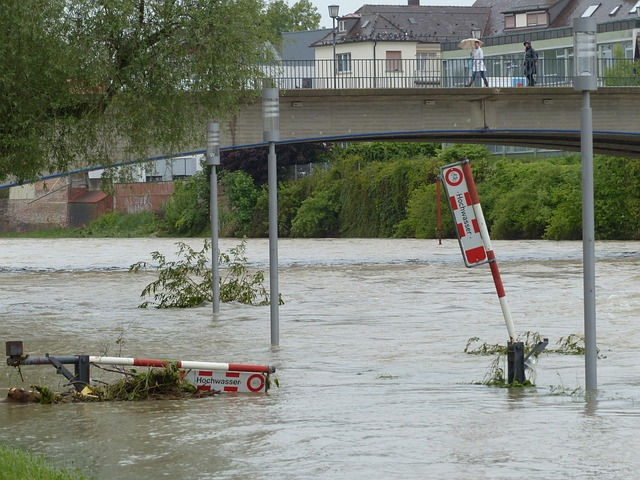
Flooding is also triggered by human activities. The first one is massive deforestation that has significantly reduced the forest area. There is not much rainwater absorbed because the number of trees has decreased. The soil structure becomes weak and highly saturated due to heavy rain. Finally, flash floods occurred when rainwater flows rapidly into lowlands.
Deforestation also happens in upstream areas with steep slopes. As a result, trees that retain rainwater have been significantly reduced. Flooding in upstream areas is more severe because the soil structure is more prone to landslides and can’t retain water without the support of tree roots.
Water catchment areas are also reduced, so flooding persists. This is again caused by human exploitation, such as illegal mining and logging. River areas are also shallow and lack sustainability. Automatically, water storage is reduced, leading to overflowing rivers.
The Facts of Environmental Damage
There is a combination of factors flood in Aceh. It is caused by natural factors and human activity. These human activities include environmental destruction and exploitation. These actions cause environmental damage and trigger flooding. The following are facts about environmental damage that have become increasingly apparent since the floods.
Massive Deforestation
Sumatra has vast forest areas. Now, some of these areas have been converted into mining and oil palm plantations. These areas are expanding, so the forest area is significantly lost. Besides the conversion, deforestation is also caused by illegal logging.
Logs in Floodwaters
The impact of these extreme floods was worsened by the presence of logs that were swept away. Floodwaters carried these logs and crushed everything in their path. After that, many fatalities were thought to have been caused by being struck by very large logs. This phenomenon is a concerning fact.
Lack of Water Catchment Areas
Indonesia as a tropical region is at high risk of extreme weather. It is requiring adequate water catchment areas. Flooding can occur during heavy rainfall if the water catchment is inadequate. Soil structure will be maintained, and water saturation can be prevented. However, water catchment areas in Aceh have significantly decreased. At the end, water saturation and heavy water flow to the lowlands.
Is There Any Early Warning?
The extreme floods that hit Aceh can be handled effectively with a rapid response and recovery. In this case, there is a collaboration of two parties for risk mitigation. They are the BMKG Region I (Aceh, North Sumatra, West Sumatra, Riau Islands, Riau) and the local government.
Before the floods, there was a potential for storms and heavy rain caused by a tropical cyclone. An early weather warning is given by BMKG. Then, the local government informed the public as a positive response. The early warning in Aceh was given four days before the disaster. It was responded to positively by the local government and disseminated through various channels.
However, the success of risk mitigation is still low considering its high impact. It can be improved by a comprehensive program in risk mitigation. Early warnings that complemented with regular outreach can ensure public awareness about the potential risks of tropical cyclones and emergency supplies. Evacuation routes also need to be re-socialized.
Ineffective risk mitigation is also caused by low public knowledge and awareness of tropical cyclones and their impacts. This is because tropical cyclones rarely occur in Indonesia due to the low Coriolis force at the equator. Disaster risks are exacerbated by human activities, including the exploitation of nature.
A highly complex situation of the flood in Aceh has terrible impacts across multiple sectors. A rapid response is needed. For further improvement, the government can enhance its risk mitigation program through a warning system and outreach in the form of SMS (Short Message Service) sent to mobile phones.
The information sent based on SMS is more effective because the information can be sent in real time to all operators. The government can provide a specific machine that facilitates message-sending by SMS. These machines have a wide range of up to 2 km. Product photos and complete specifications can be found at smsbroadcaster.com.


Comments