The Sequence of California Earthquake Tsunami

A California earthquake tsunami is included in a terrible natural disaster. Major earthquakes striking the region have frequently resulted in tsunamis. In mid-2026, there was a series of earthquakes in California over several days, but they didn’t cause a tsunami. There is no potential for a tsunami based on monitoring by the warning systems.
California Earthquake Tsunami in the Mid-2026
Earthquakes and tsunamis often hit certain areas, including California. Geographically, it is located on the San Andreas Fault as the junction of the major tectonic plates. This fault marks the boundary between the North American Plate and the Pacific Plate. The situation is highly risky due to the presence of actively moving tectonic plates. It is this movement that generates the tremors known as earthquakes.
The resulting earthquake is of a specific type, namely strike-slip fault. The two colliding plates slid horizontally past each other. The pressure generated by this movement was immense, resulting in powerful tremors. Here is the chronology of the earthquake that struck California in mid-2026.
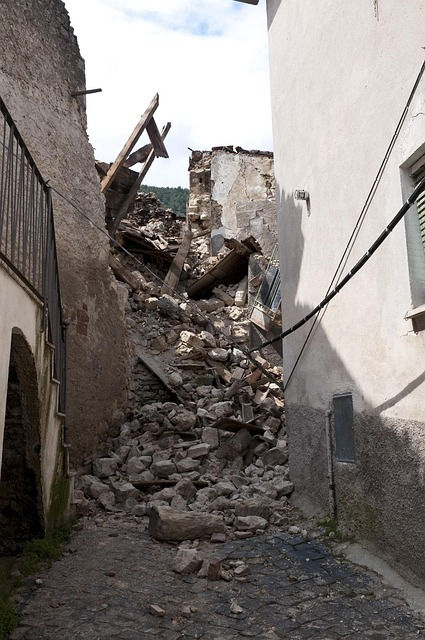
Earthquake in Northern California
The first earthquake of mid-2026 occurred on June 3rd off the coast of Northern California. Having 5.7 M and a depth of 10 km, the earthquake was centered in the Pacific Ocean, specifically 171 km west of Crescent City. Based on data from detectors and analysis by the United States Geological Survey (USGS), no tsunami threat caused by earthquakes.
Aftershocks in Northern California
Not only once, but the earthquake in Northern California continued. There was an aftershock on June 5th on the coast of Petrolia, Northern California. It was the same with the previous earthquake, with a magnitude of 5.1 and approximately 10 km in depth.
Earthquake in Southern California
After an earthquake occurred in Northern California, it was felt in Southern California, specifically in Fillmore City. This earthquake is a minor activity, not as strong as the previous one. It didn’t cause a tsunami. This earthquake, which occurred on June 6th, had a magnitude of 3.5. There were no reports of damage or injuries. Another earthquake with 3.2 M occurred in the Loma Linda area in mid-June.
Earthquake at the End of June
In late June, earthquakes of lower magnitude occurred again. A series of small tremors took place between June 22nd and 24th. These quakes were distributed across several regions, such as 3.6 M in Southern California, 2.6 M near Cobb in Northern California, and 2.7 M near Ridgemark on California's Central Coast.
The Government’s Role in Mitigating Risks
To face the case of the California earthquake tsunami, the government must arrange an effective mitigation program. The program encompasses everything from prevention to post-disaster recovery, with the government working alongside relevant agencies to carry out these efforts. The following is an explanation of the government's role in earthquake and tsunami risk mitigation in California.
Gives Early Warning
The California government has implemented a disaster warning system, including for earthquakes and tsunamis. The primary component is an early warning system that gives alerts before a disaster strikes. These early warnings rely on data from monitoring detectors, ensuring accuracy and allowing for timely evacuation. A warning signal given through sirens or alarms and emergency messages.
Intensive Evacuation and Monitoring
Intensive evacuation operations were carried out following the disaster, involving coordination among various parties. Aid was distributed rapidly to enhance the safety of the victims. California emergency service agencies, together with local authorities, activated monitoring protocols until the situation is stable. The recovery process is being managed effectively to get back to normal conditions.
Continued Report
Disaster reports are continuously issued to ensure up-to-date information. The aim is to keep the public informed about disaster response progress, enabling them to help disseminate information and manage disaster risks. These reports can be accessed via television and radio broadcasts, the official websites of relevant agencies, mass media, and social media.
Strengthen Risk Mitigation Program
Government vigilance naturally intensifies following a disaster. Although disaster prevention and response programs are already in place, evaluations are conducted to ensure that every process operates more effectively. The occurrence of a disaster also serves as a reminder that disaster risk mitigation must be continuously monitored and improved.
Increasingly advanced technological developments need to be utilized to strengthen disaster warning systems. A California earthquake tsunami is a potential emergency that often occurs, so it needs extra monitoring. For the safety of all and the prevention of disaster risks, the government needs to ensure the smooth delivery of emergency messages.
An emergency message-sending based on SMS (Short Message Service) is the solution. It can send a real-time message up to 2 km for all operators. The public in affected areas gets an early warning and evacuation alert through a message with accurate and complete information. The photo and real specification can be accessed at smsbroadcaster.com.


2 Comments